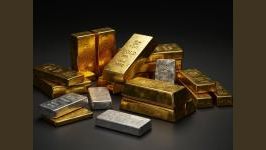
The Timeless Journey of Gold: Heart of Economy and Global Trust
Thursday 18 Dec 2025 03:24 PM

In a world dominated by digital money, where crypto assets move in a virtual space without tangible form, gold remains resilient, as if it refuses to leave history. It is the metal that defied time, technology, and modern financial innovations, remaining a steadfast reference and the ultimate safe haven sought by everyone during economic crises.
This scenario raises a fundamental question: How does a yellow metal, without direct returns or tangible profits, continue to be the most accurate measure of global confidence in the economy? The answer lies in the story of gold itself. It is not just the tale of a passing commodity but a living record of the evolution of human trust, a journey that began as a shiny ornament adorning ancient civilizations, then became the backbone of the global financial system, and finally settled today in its eternal place at the heart of the economy, where gold remains a symbol of wealth and stability, and the most accurate measure of the value of money and reassurance throughout the ages.
The first stop: The invention of "trust" in Lydia
Before gold became money, it was beautiful. Its known history began in Eastern Europe around 4000 BC, where it was used to make decorative objects. For thousands of years, gold was a symbol of immortality and power, often representing the sun. Even when used by the ancient Egyptian empire as an "official medium of exchange" around 1500 BC, it still faced a practical problem; traders had to weigh and test the purity of the metal in every transaction using a "touchstone."
Over time, the game-changing innovation came from the Kingdom of Lydia in modern-day Turkey. Around 560 BC, while King Croesus wasn’t the first to mint coins, he made the genius move of issuing the first coins made of pure gold and pure silver, setting a new standard for trust and exchange. Most importantly, he put the "king's seal" on them. It was not just an invention of a coin but an invention of "unified trust" sponsored by the state.
With the seal of the state, traders no longer needed to test the metal; they trusted "state security." Croesus transferred trust from the metal itself to the authority behind it, marking the birth of modern money.
The second station: The "Mercantilism" craze and the cost of looting
Centuries later, gold's role shifted from being an economic guarantee to an obsession. With the rise of European empires in the 16th century, the theory of "Mercantilism" dominated economic thinking. The doctrine was both simple and dangerous: the world's wealth was fixed and limited, and the only way for one country to get richer was to make another poorer. Trade thus became a "zero-sum game."
In this world, wealth was measured by a single factor: the amount of bullion of gold and silver piled up in the vaults. Each nation’s sole goal was to achieve a lasting trade surplus to ensure the flow of gold inward. This obsession was the main driver for the search for gold and silver in the New World.
The ancient Spanish Empire employed harsh labor systems like "Encomienda" to extract massive amounts of precious metals from the Americas. Throughout the 16th century, bullion accounted for "at least 80% " of the value of all shipments to Europe. However, history did not spare this massive influx of gold, which temporarily made the Spanish Empire the richest in the world before it ultimately destroyed its economy.
This led to hyperinflation, with prices rising by 400%. Instead of gold staying in Madrid, "it flowed through" to finance wars and purchase goods from more productive countries, proving that accumulating symbols of wealth could destroy its real engines. With the collapse of the hoarding frenzy, a new era of financial discipline emerged. Gold became more than just wealth; it became the foundation of the global financial system.
The third station: The "Golden Cage" and global discipline
By the early 19th century, gold reached the peak of its power with what became known as the "Classical Gold Standard" (1880-1914). Gold was no longer just wealth to hoard; it became the global monetary system itself.
Under this system, every major country pegged its currency to a specific amount of gold. In the United States, the price was set at $20.67 per ounce. The system seemed like a precise machine that "self-corrected."
Over time, a double-edged discipline emerged: the system was run with iron discipline from London, but it was a "golden cage" that imposed a high cost, violent fluctuations in income growth, high unemployment, and restricted governments from using monetary policy to combat recessions.
In this system, every major country linked its currency to a specific amount of gold. In the United States, the price was set at $20.67 per ounce. The system appeared to be a precise machine that "self-corrected."
If a country faced a trade deficit, gold would flow out, and it had to follow the so-called rules of the game: "raise interest rates" to reduce monetary supply and attract gold back. This system was managed with iron discipline from London.
The Bank of England, as Keynes described it, was the "international orchestra conductor," effectively managing the global cost of credit. But this system was a "golden cage," its greatest virtue being long-term price stability; inflation in America averaged around 0.1% annually. But the price of this stability was high: sharp fluctuations in income growth and high unemployment, which averaged 6.8% in the United States.
Even worse, it tied the hands of governments; they could not use monetary policy tools such as lowering interest rates to fight recessions. The priority was always to protect the currency's link to gold, even at the expense of jobs and citizens' livelihoods.
As global crises accumulated, cracks began to appear in this rigid system, revealing the fragility of absolute reliance on gold and paving the way for new monetary standards. "But this discipline did not last long, as global crises exposed the weakness of absolute reliance on gold, paving the way for new standards."
The fourth station: The Great Depression and the Battle of Bretton Woods
With the outbreak of World War I, this precise machine collapsed, and then came the Great Depression in the 1930s, exposing the fragility of absolute reliance on gold. During the crisis, countries learned an important lesson: those that abandoned the gold standard early, like Britain in 1931, were the first to recover. This lesson was carried to the Bretton Woods Conference in 1944, where the major powers engaged in a battle to determine the future of the global economy.
The knockout blow came with the "Great Depression" of the 1930s. This crisis showed that the "gold standard mentality" was what turned an ordinary recession into a global catastrophe. The "rules of the game" required central banks to do the opposite of what the economy needed: Instead of injecting liquidity, they were forced to raise interest rates to protect their gold reserves, further deepening the crisis.
Data clearly shows that countries that "abandoned the gold standard early," such as Britain in 1931, were the first to begin recovering. The political lesson learned was that it was no longer possible to tell unemployed voters that they had to suffer to maintain a stable price for a yellow metal. This lesson was carried by the negotiators to the Bretton Woods Conference in 1944.
At this historic meeting, the goal was not just to build a new system but to fight a battle to determine the future of the global economy. The battle at Bretton Woods was between two economic giants, British John Maynard Keynes, who proposed the creation of a world central bank and a new global currency called "Bancor," and American Harry Dexter White, who put forward a plan to keep the U.S. dollar at the heart of the system.
White's plan prevailed. The "golden dollar standard" was born, and all countries agreed to peg their currencies to the dollar, with the United States alone pledging to peg the dollar to gold at a fixed price of "$35 per ounce," making the dollar as good as gold, or even better.
However, IMF papers reveal that other central banks, especially European ones, continued to hold large reserves of actual gold despite the absence of any obligation to do so and its high costs. This was not merely an "old habit" but an early strategic hedge, as these countries trusted the tangible metal more than the promise of the U.S. dollar.
With economic and political developments after the war, gold became the focal point of a larger game than mere reserves, proving that it remained the ultimate symbol of trust in the global financial system.
The fifth station: "Nixon Shock" and the end of the promise
After decades of operating under the Bretton Woods system, the "Nixon Shock" in 1971 closed the gold window and changed the rules of the game once again. Currencies turned to "fiat money," and government trust became the primary guarantor of their value.
The Bretton Woods system carried the seeds of its collapse, known as the "Triffin Dilemma." For the global economy to grow, it required more dollars, and to provide them, America had to manage a continuous deficit. As dollar supplies increased abroad, they exceeded American gold reserves, eroding trust in the United States' ability to honor its promise of converting dollars to gold at $35 an ounce.
By 1971, the ticking time bomb was about to explode. President Richard Nixon faced double pressure: an "attack on gold" from foreign countries losing confidence and demanding the conversion of their dollars to actual gold, and a domestic stagflation combining inflation and unemployment.
In a secret meeting at Camp David, Nixon made his decision, and on August 15, 1971, he delivered a televised speech announcing the "closure of the gold window," unilaterally ending the dollar's convertibility to gold.
This moment was a shock to the world, which many considered a soft default, leading to the collapse of the last attempts to maintain fixed exchange rates. By March 1973, the world moved to the current system of "floating exchange rates" and "fiat currency," where money's value is based on trust in the issuing government, not any physical asset.
Despite the fall of Bretton Woods, gold did not disappear as some expected. Instead, it began a new, more flexible chapter with strategic roles, solidifying its continuous position as a symbol of trust and a safe haven in the global economy.
The sixth station: The "liberated" gold and new boundaries
With the collapse of the Bretton Woods system, gold was freed from its traditional constraints, finding new roles in the global financial system. It was no longer just a fixed measure of currency value but became a strategic tool and a reference for economic trust, a safe haven in times of crises.
Today, gold remains a central element in shaping financial stability, whether through central bank reserves, as a hedge against risks, or even as a perpetual symbol of wealth and reliability. It is a metal whose role transcends material value, serving as a mirror reflecting the state of global trust in a rapidly changing economy.
Having lost its traditional role as a monetary anchor, gold gained broader strategic importance. It is no longer just a wealth metal but holds a pivotal position in the modern economy, liberated from its old constraints to perform new roles at the heart of the global financial system.
First: The safe haven
Gold has become a precise measure of confidence or lack thereof, with data showing that gold rises during times of extreme uncertainty, such as the 2008 crisis and the COVID-19 pandemic, while other assets collapse, making it the last bastion for financial stability.
Second: Inflation hedge "A myth under review"
Despite the common belief that gold protects against inflation, analyses by the CFA Institute and other studies indicate that the relationship between gold and inflation is unstable, and it is not a reliable long-term hedge in major economies like the United States and China.
Third: Returning to vaults
Since the 2008 crisis, central banks, especially in emerging markets, have intensified gold purchases at record levels. This is not an old tradition but a rational choice; gold is the only reserve asset that can be insulated from sanctions and carries no counterparty risk, as its value does not depend on the promises of any other government.
Fourth: Chinese technological innovation
Today, China, the world's largest producer and consumer of gold, is pushing the boundaries of innovation in this precious metal. The term "manufactured gold" has caused some confusion but actually refers to two entirely different innovations:
Hard Pure Gold for jewelry: This gold is not synthetic but represents an improvement in manufacturing processes. It is real gold certified with a purity of 99.9% (24 karats) and processed with advanced techniques like "3D Hard Gold" and "5D Hard Gold" to become more scratch and deformation-resistant, addressing the problem of traditional gold's softness and allowing for durable jewelry suitable for daily use.
Industrial substitute (Synthetic Substitute): This represents a radical innovation in the industry. Chinese scientists have not created the element gold (Au) itself but have developed a composite material, often from cheaper metals, designed to mimic gold's fundamental characteristics such as shine, color, and corrosion resistance. This development is seen not as a threat to gold's financial value but as a high-performance industrial substitute used in electronics and other industrial applications to reduce costs while maintaining gold's key properties.
Gold is not just a precious metal; it is a mirror reflecting the journey of human civilization with all its transformations. Since King Croesus minted his gold coins to make it a symbol of trust and power, through gold's transformation into "economic discipline" binding the world to strict rules, and then to an American promise in the Bretton Woods system, this metal has remained at the core of humanity's financial system.
When the "Nixon Shock" came in 1971, it did not end the era of gold as many expected but liberated it from its role as a heavy anchor, driving it to play a new, more dynamic role, a sensitive measure of world confidence. Gold no longer rules the economy, but it has become the most accurate indicator of market mood and the level of certainty or anxiety in the global system.
Despite money transitioning from a metal one can hold to printed paper, and then to digital signals stored in the cloud, gold retains its unique place. It combines features unmatched by any other asset: rarity, longevity, ease of transport, stability, symbolism, and beauty. Its value lies not only in its yellow atoms but also in its symbolism and beauty, and the social and economic roles it has played over thousands of years.
Today, in a world where financial changes and fluctuations accelerate, gold, this eternal metal, maintains its position as a firm gauge of trust and stability. It is not just a store of value; it is a standard that clearly reveals our faith or hesitation in the systems we build. Thus, gold remains the steadfast metal of truth, enduring, no matter how the global economic landscape changes.
Gold Market News
09 Jun 2026

05 Jun 2026
04 Jun 2026
03 Jun 2026